
Selective disassociation over social media
Two group. Those who want no digital footprint and those who are EVERYWHERE.

Hello Nextdoor stackers and welcome to my fourth (#4) Monday issue around my study on AI and where I explain in simple terms what I'm learning along the way.
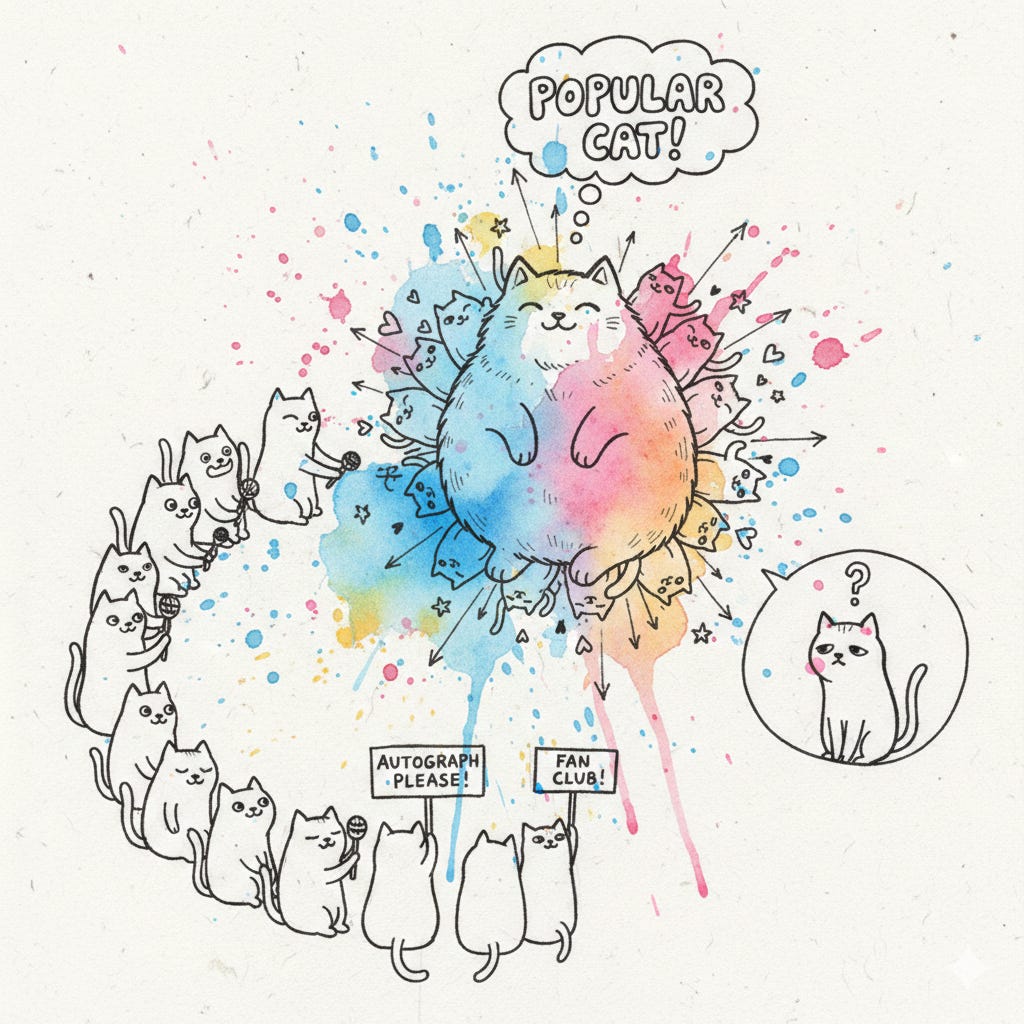
So last month, my friend Josh told me he deleted all his social media accounts. Every single one. Facebook, Instagram, LinkedIn, even his old Twitter he forgot existed.
“I’m done being a product,” he said. “Big Tech isn’t getting another second of my time.”
I wasn’t surprised but I was intrigued to know how he got there…to make such a bold and impulsive decision.
Don’t get me wrong. I understand the appeal. We’re all tired of being tracked, targeted, and turned into data points. The idea of becoming a digital ghost sounds like the ultimate power move. Like you’re finally beating the system, eh.
But here’s what I’ve noticed, while Josh was busy disappearing, another friend of mine, Gift, was doing the exact opposite. She’s everywhere. TikTok, Instagram, LinkedIn, Threads, even Pinterest. Posting three times a day. Building her personal brand. Monetizing her influence.
And here was I. Two friends. Two completely opposite strategies. And honestly? Neither one seems all that happy about it. I wouldn’t say I was better off. Truth is, it’s not that easy showing up and building. Nothing worth doing is easy.
There are basically two camps right now, and they’re both reacting to the same problem: we’ve lost control of our digital lives.
The Ghosts want to disappear. They’re done with the surveillance, the algorithms, the constant performance. So they delete everything and try to vanish.
The Dominators want maximum visibility. They’re building empires out of their online presence. Personal branding on steroids. “If you’re not online, you don’t exist.”
Both make sense on paper. Privacy matters. So doesn't opportunity. But in practice? Both extremes are kind of a mess.
The “Digital Ghost” thing falls apart. Here’s what I’ve learned from watching people try it.
First, you’re not really invisible. Josh deleted his accounts, sure. But Meta still has his data. Google still knows what he searched for in 2019. His phone carrier still tracks his location. Deleting your profile doesn’t delete you from the servers. It just makes you feel like you did something.
True anonymity takes serious effort. Most people don’t have the technical skills for it. And even if you do, one mistake (like logging into an old account from your real IP) can blow your cover. You feel me?
Second, you start losing opportunities. When people Google you, they find nothing. No portfolio. No LinkedIn. No proof he was even a real person. Imagine the roles reversed and you want to work with a top money person. If they don’t have a digital footprint, you begin to doubt their credibility and integrity…right?
In 2026, having zero online presence doesn’t make you mysterious. It makes you a liability. People assume you’re hiding something or that you’re completely out of touch. You’re more vulnerable than you think.
Third, you cut yourself off from the good stuff too. Yeah, social media can be toxic. But it’s also where communities form. Where people organize. Where you find others who actually get what you’re going through.
Going ghost might protect your data, but it also isolates you. And for what? So you can feel morally superior at parties?
Fourth, it’s exhausting. Maintaining true anonymity is basically a part-time job. You need different emails for every service. You have to remember which fake name you used where. You can’t slip up even once.
Most people burn out in a few months. They either give up completely or do it halfway, which is worse than not trying at all.
And fifth... let’s be honest. Sometimes it’s just performative. I’ve met people who brag about deleting Instagram while still ordering from Amazon, using Google Maps, and paying for everything with a credit card. That’s not going off the grid. That’s just... not using Instagram. And I think I understand. It’s a selective disassociation which is justifiable. You’re choosing which parts of the system you’re uncomfortable with while ignoring the rest. Believe me, it makes perfect sense from a human psychology standpoint. We can’t fight every battle, so we pick the ones that feel most manageable or visible. Instagram feels personal. It’s your face, your life, your friends seeing what you post. Deleting it feels like reclaiming something intimate. There’s an emotional weight to it.
Amazon? That’s just... shopping. It’s transactional. It doesn’t feel like it’s taking anything from you, even though it absolutely is. Probably more than Instagram ever did.
People opt out of the parts that feel invasive or performative while staying fully plugged into the infrastructure that actually powers the whole surveillance economy
It’s not necessarily hypocritical. It’s just... incomplete. Like putting a band-aid on one cut. If the goal is to stick it to Big Tech, you’re going to need a bigger plan.
But the “Dominate Everything” approach isn’t much better. So what actually works? I’m not saying privacy doesn’t matter. It absolutely does. And I’m not saying you shouldn’t have an online presence. You should. But I think the goal shouldn’t be to disappear or dominate. It should be to control what people see without letting it control you.
Here’s what I do instead:
I’m picky about what I share and where I share it. Not everything needs to be public. Not every platform deserves my time.
I use privacy tools without going full paranoid. Password managers, encrypted messaging, ad blockers. The basics…and somehow, in terrified that there’s a loophole in those systems but I wouldn’t let it control my life.
I make sure that when someone Googles me, they find what I want them to find. Not nothing. Not everything. Just the right things.
And I set boundaries. I don’t owe the internet my every thought. But I also don’t need to vanish to prove that. I post when I have something to say. I ignore it when I don’t.
The digital ghost thing sells because it feels like taking back control. The personal branding thing sells for the same reason. But real control isn’t about hiding or performing.
It’s about deciding what the world gets to see without losing yourself in the process.
You don’t need to be invisible. You don’t need to be everywhere. You just need to be intentional.
So, what do you think? Are you team “delete everything,” team “post everything,” or somewhere in between? Hit reply. I actually read these.
If this was worth you time, and you gained a little something from it, I’d appreciate the kind gesture of sharing and leaving a comment.
Feedback matters to me. Your thoughts also matter. It’ll help me understand what you want to learn more about and how I can help.